


Soms vraag ik me af waarom u ook stemrecht hebt. Onze democratie zou zoveel beter functioneren als ik het voor het zeggen heb. Maar goed, dat is wat onze voorvaderen hebben besloten: dat ik ook met uw nukken moet leren omgaan. En wie ben ik om de wensen van onze voorvaderen te negeren. Alhoewel. Als je bedenkt dat onze voorvaderen onze voormoederen negeerden en een heel democratisch systeem baseerden op de gedachte dat de mens rationeel is, moet je je toch afvragen of het niet tijd wordt om het over de fundamenten van onze democratie te hebben.

Leugens zijn onderdeel geworden van het politieke spel. En leugens worden niet afgestraft, zoals je zou verwachten. Nee, liegen is een strategie geworden van menig dictator, machtswellusteling en politicus.
Ex-president’s repetition of unsubstantiated claims prompts ABC moderator to fact-check him on air.
Op 7 juli 2023 viel het kabinet-Rutte IV. VVD, D66, CDA en ChristenUnie konden het niet eens worden over de gezinshereniging van asielzoekers. Een dag later legde Dilan Yesilgöz, destijds minister van Justitie en onderhandelaar namens de VVD aan de asieltafel, bij praatprogramma Op1 verantwoording af. Althans, dat dacht iedereen.
Complotdenkers worden vaak weggezet als een stel gekkies. Onterecht meent socioloog Jaron Harambam die jarenlang veldwerk deed in de Nederlandse complotdenkerswereld. Sterker, we kunnen best wat van complotdenkers leren.
Deze diepgaande analyse onderzoekt de ongemakkelijke psychologie achter de redenen waarom intelligente, hoogopgeleide mensen door de geschiedenis heen op autoritaire leiders hebben gestemd.
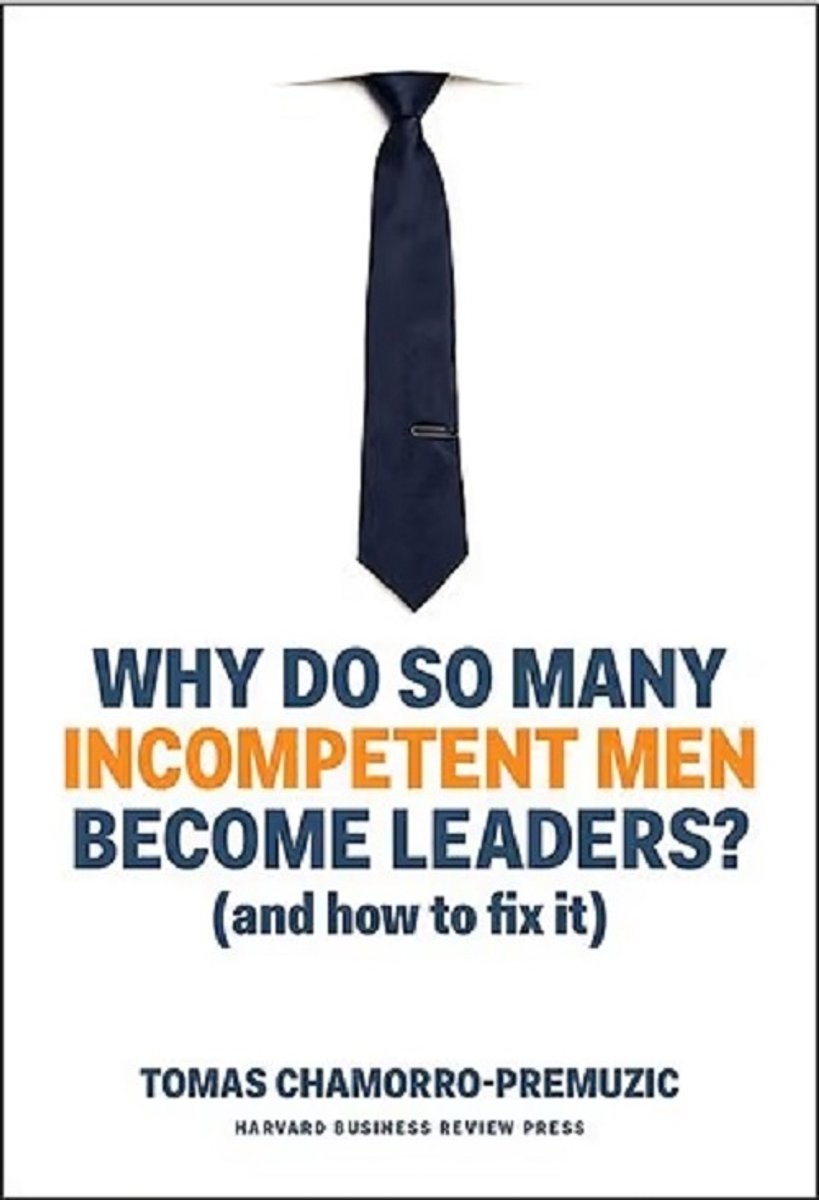
Mensen willen een positief zelfbeeld behouden. Daarom zien we onszelf vaak als beter dan andere personen. Door onze competenties te overschatten. Door te veronderstellen dat we meer controle hebben over taken en situaties dan in werkelijkheid het geval is. Mannen - zeker narcistische mannen - zijn daarbij overmoediger dan vrouwen.
Marshaling decades of rigorous research, Chamorro-Premuzic points out that although men make up a majority of leaders, they underperform when compared with female leaders. In fact, most organizations equate leadership potential with a handful of destructive personality traits, like overconfidence and narcissism. In other words, these traits may help someone get selected for a leadership role, but they backfire once the person has the job.
The better-than-average-effect (BTAE) is the tendency for people to perceive their abilities, attributes, and personality traits as superior compared with their average peer. This article offers a comprehensive review of the BTAE and the first quantitative synthesis of the BTAE literature.
This study tested 3 main hypotheses concerning people's predictions of task completion times: (a)People underestimate their own but not others' completion times, (b) people focus on plan-basedscenarios rather than on relevant past experiences while generating their predictions, and (c) people'sattributions diminish the relevance of past experiences. Results supported each hypothesis.
Conducted a series of 6 studies involving 631 adults to elucidate the "illusion of control" phenomenon, defined as an expectancy of a personal success probability inappropriately higher than the objective probability would warrant. It was predicted that factors from skill situations (competition, choice, familiarity, involvement) introduced into chance situations would cause Ss to feel inappropriately confident.Indicators of confidence in all 6 studies supported the prediction.
Many prominent theorists have argued that accurate perceptions of the self, the world, and the futureare essential for mental health. Yet considerable research evidence suggests that overly positive self-evaluations, exaggerated perceptions of control or mastery, and unrealistic optimism are characteris-tic of normal human thought. Moreover, these illusions appear to promote other criteria of mentalhealth, including the ability to care about others, the ability to be happy or contented, and the abilityto engage in productive and creative work. These strategies may succeed, in large part, because boththe social world and cognitive-processing mechanisms impose filters on incoming information thatdistort it in a positive direction; negative information may be isolated and represented in as unthreat-ening a manner as possible. These positive illusions may be especially useful when an individualreceives negative feedback or is otherwise threatened and may be especially adaptive under these circumstances.
We present evidence from an experiment in which groups select a leader to compete againstthe leaders of other groups in a real-effort task that they have all performed in the past. We find that women are selected much less often as leaders than is suggested by their individualpast performance. We study three potential explanations for the underrepresentation of women, namely, gender differences in overconfidence concerning past performance, in the willingness to exaggerate past performance to the group, and in the reaction to monetaryincentives. We find that men’s overconfidence is the driving force behind the observedprevalence of male representation.
Despite the widely held belief that men are more narcissistic than women, there has been no systematic review to establish the magnitude, variability across measures and settings, and stability over time of this gender difference.
Women in the United States are making historic progress in business leadership, with research linking women's leadership representation to positive outcomes. However, men still dominate US leadership, raising several key questions. Is the United States closing the leadership gender gap? What organizational barriers perpetuate the gap? What facilitates women's leadership?
This paper develops a novel method to identify the causal contribution of managers to teamperformance. The method requires repeated random assignment of managers to multiple teamsand controls for individuals’ skills. A good manager is someone who consistently causes theirteam to produce more than the sum of their parts. Good managers have roughly twice the impacton team performance as good workers. People who nominate themselves to be in charge performworse than managers appointed by lottery, in part because self-promoted managers areoverconfident, especially about their social skills. Managerial performance is positively predictedby economic decision-making skill and fluid intelligence – but not gender, age, or ethnicity.Selecting managers on skills rather than demographics or preferences for leadership couldsubstantially increase organizational productivity.
Omdat we een verknipt beeld hebben van wat een baas goed of slecht maakt, blijven we de verkeerde mensen baas maken. Wil je écht een goede baas? Ga dan een keer niet voor de persoon die zijn vinger opsteekt.
Psychologisch onderzoek laat zien dat wij over het algemeen de weg van de minste weerstand kiezen. Bij stress, tijdgebrek en informatie 'overload' verwerken we informatie op basis van eenvoudige beslisregels. Dat heeft enorme impact op onze maatschappij en democratie. Omdat de simpelste boodschap het meest overtuigd. Omdat die beslisregels voor fouten zorgen in ons denken.
Behavioral and economic theories have long maintained that actions are chosen so as to minimize demands for exertion or work, a principle sometimes referred to as the “law of less work.” The data supporting this idea pertain almost entirely to demands for physical effort. However, the same minimization principle has often been assumed also to apply to cognitive demand. We set out to evaluate the validity of this assumption.
It has long been assumed that people treat cognitive effort as costly, but also that such effort costs may vary greatly acrossindividuals. Individual differences in subjective effort could present a major and pervasive confound in behavioral andneuroscience assessments, by conflating cognitive ability with cognitive motivation.
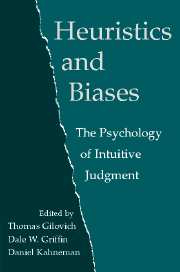
The program of research now known as the heuristics and biases approach began with a survey of 84 participants at the 1969 meetings of the Mathematical Psychology Society and the American Psychological Association (Tversky & Kahneman, 1971). The respondents, including several authors of statistics texts, were asked realistic questions about the robustness of statistical estimates and the replicability of research results. The article commented tongue-in-heek on the prevalence of a belief that the law of large numbers applies to small numbers as well: Respondents placed too much confidence in the results of small samples, and their statistical judgments showed little sensitivity to sample size.
Subjective effort costs are increasingly understood to diminish cognitive control over task performance and can thus undermine functioning across health and disease. Yet, we are only beginning to understand how decisions about cognitive effort are made. A key question is how subjective values are computed. Recent work suggests that the value of cognitive effort might be computed by networks that are distinct from those involved in other domains like intertemporal and risky decision-making, implying distinct mechanisms. Here we demonstrate that the domain-general network also encodes effort-discounted value, linking cognitive effort closely with other domains. Our results thus elucidate key mechanisms supporting decisions about cognitive effort, and point to candidate neural targets for intervention in disorders involving impaired cognitive motivation.
We propose that aesthetic pleasure is a funnction of the perceiver's processing dynamics: The more fluently perceivers can process an object, the more positive their aesthetic response. We review variables known to influence aesthetic judgments, such as figural goodness, figure-ground contrast, stimulus repetition, symmetry, and prototypicality, and trace their effects to changes in processing fluency. Other variables that influence processing fluency, like visual or semantic priming, similarly increase judgments of aesthetic pleasure.
In onze individualistische, westerse maatschappij leven we vaak in de veronderstelling dat we zelfstandig oordelen en besluiten. Ons denken en doen wordt echter sterk beïnvloed door groepen. We vergelijken onszelf met anderen en proberen een positief zelfbeeld te behouden. We veronderstellen dat mensen uit onze eigen groep net zo over situaties denken als wijzelf. We zetten ons af tegen groepen waartoe we onszelf niet rekenen.
Collectieve illusies leiden ertoe dat individuen beslissingen nemen die in strijd zijn met hun persoonlijke waarden, simpelweg omdat een meerderheid van de mensen in een groep gelooft dat de meerderheid iets denkt wat zij niet denken. Daardoor kan de hele groep uiteindelijk iets doen wat bijna niemand wil, wat fataal is voor een vrije samenleving.
Behind the Curve is a 2018 documentary film about flat Earth believers in the United States. Directed by Daniel J. Clark, the film was released in the United States on November 15, 2018, and for wide release on Netflix in February 2019.[1]
The documentary details ideas of the flat Earth from different perspectives, including prominent flat-Earthers Mark Sargent and Patricia Steere,[2] as well as astrophysicists from universities including UCLA and Caltech.[3] It features clips from the 2017 International Flat Earth Conference, held in North Carolina, US, which attracted hundreds of attendees from around the globe.
In comparison processes between the self and others within a given social set, a marked tendency has been frequently observed for each person to present himself as more in conformity with the social norms prevailing in the set under consideration than others participating in this set generally are. This article sets out to synthesize twenty experimental investigations in which it was attempted to delimit and explain this behavior.
Group polarization is a social phenomenon where individuals in a group tend to adopt more extreme positions on issues after discussions compared to their initial opinions. This behavior was first identified by James A. F. Stoner in 1961 during his research on decision-making regarding risk-taking, a finding he initially termed "risky shift." Group polarization can occur due to social comparisons, where individuals adjust their views based on their perceptions of group consensus, or through persuasive arguments that present compelling reasons to adopt a more extreme position. It has implications across various domains, including politics, finance, and social interactions, and can lead to both beneficial and harmful outcomes depending on the context.
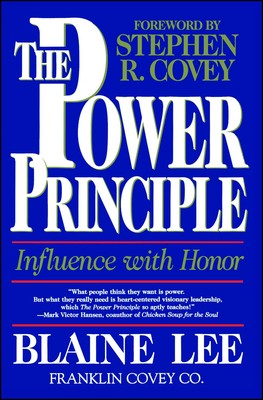
Politiek is ruilhandel. Een ruilhandel van belangen. Zelfs internationaal recht en universele mensenrechten worden ruilhandel, zoals blijkt uit de gebeurtenissen in Gaza. En als je niets hebt om te ruilen, ben je helemaal machteloos. Het wordt tijd dat politici het boek van Blaine Lee eens lezen. Dan hadden ze veel eerder erkend dat Israël genocide pleegt. Dan hadden ze maatregelen moeten nemen.
In the life-changing tradition of The 7 Habits of Highly Effective People, The Power Principle teaches the core principles that dramatically affect our careers and our lives. Dr. Blaine Lee, an extraordinary teacher, shows how principle-centered power is the ability to influence others' behavior, not to control, change, or manipulate it. Power is something other people feel in your presence because of what you are as well as what you can do, what you stand for, and how you live your life. When you honor others, they will honor you. Lee shows you how to overcome powerlessness, create legitimate power and influence with honor, and create a legacy that will outlast you in the lives of the people you care the most about.
Israel has committed genocide against Palestinians in the Gaza Strip, the UN Independent International Commission of Inquiry on the Occupied Palestinian Territory, including East Jerusalem, and Israel said in a new r today. The Commission urges Israel and all States to fulfil their legal obligations under international law to end the genocide and punish those responsible for it.