


Ik denk dat het een complot is, die complottheorieën. U gelooft toch niet werkelijk dat Lange Frans denkt dat onze hele regering uit pedofielen bestaat? Zo dom is hij nou ook weer niet. Hij ziet er alleen zo uit. Juist dat maakt het zo eenvoudig om hem aan de kant te zetten als complotdenker, als gekkie, als wappie, als iemand wiens vragen je niet hoeft te beantwoorden, op wiens beschuldigingen je niet serieus hoeft te reageren. Lekker makkelijk.
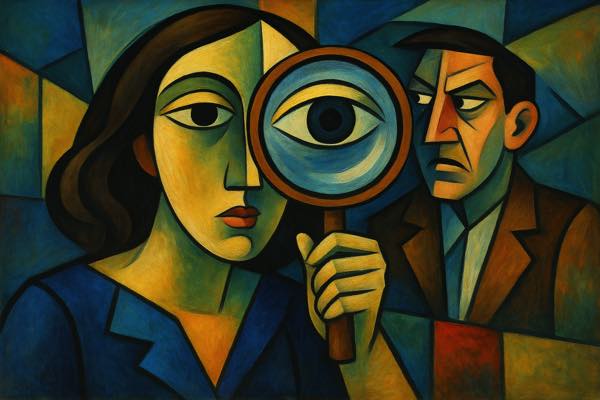
Het woord complot werd volgens complotdenkers geïntroduceerd door de CIA om een allerlei duistere praktijken te kunnen afdoen als complotten. Typerend voor complottheorieën is dat bewijs, onderbouwing of een logische redenering ontbreekt.
YouTube heeft het kanaal van Lange Frans offline gehaald. De veelbesproken interviews waarin de rapper het coronabeleid bekritiseert en complottheorieën aanhaalt zijn daardoor niet meer via het platform te zien, maar ook zijn muziek is weg.
Lange Frans (39) heeft met een anderhalf uur durende podcast voor flink wat ophef gezorgd. De rapper heeft namelijk in gesprek met 'graancirkelspecialiste' Janet Ossebaard (53) nogal zorgwekkende uitspraken gedaan over een potentiële aanslag op premier Rutte.
Arjen Lubach (40) heeft het gehad met de 'fabeltjesfuik' van BN'ers als Lange Frans (39). In 'Zondag met Lubach' bekritiseerde hij de rapper, omdat hij gelooft dat de elite en politieke leiders een pedofielennetwerk onderhouden.
Het wantrouwen richting de overheid en media groeit. En dat komt deels omdat op sociale media een heel circuit aan mensen langzaamaan een eigen parallelle werkelijkheid in wordt gezogen. En hoe langer mensen in die fuik zitten, hoe meer ze openstaan voor radicale ideeën die ze zelf nog niet hadden.
Ik weet niet zo goed waar de term 'actieve herinnering' vandaan komt. Ik vermoed dat Rutte het heeft verward met de 'actieve woordenschat' - de woorden die we actief kunnen gebruiken - en 'passieve woordenschat' - de woorden die we begrijpen als iemand anders ze gebruikt, maar niet tot ons repertoire behoren als we zelf spreken. In dat geval zou het dus betekenen dat Rutte zich al die incidenten uit het nieuws zelf niet kan ophalen. Wat dan absoluut niet betekent dat hij ze niet zal herkennen als ze hem verteld worden.
Tijdens de Nacht van Rutte dreigde even het einde van het premierschap van Mark Rutte (VVD). Hij bleek onterecht gezegd te hebben dat hij niet over CDA-Kamerlid Pieter Omtzigt had gesproken tijdens de formatiegesprekken. Hijzelf zei in het debat niet gelogen te hebben, maar er geen herinneringen aan te hebben. Zijn coalitiegenoten vielen hem vervolgens af in het debat, maar waren niet bereid hem weg te sturen.
Premier Mark Rutte had naar eigen zeggen tijdens de formatiegesprekken niet gesproken over CDA-politicus Pieter Omtzigt. Donderdag kwam naar buiten dat dit wel is gebeurd. Het is niet de eerste keer dat de premier zich bepaalde gesprekken ‘niet herinnert'. Abonneer je NU op het NU.nl
Steeds vaker zeggen politici en verdachten ergens ‘geen actieve herinnering’ aan te hebben. Premier Rutte blies het retorische foefje nieuw leven in, maar is er niet de uitvinder van.
Onze conclusies en oordelen zijn niet zo rationeel en overwogen als we vaak zelf denken. Ze zijn vaak het resultaat van automatische processen waarbij we gebruikmaken van cultureel bepaalde cognitieve scripts. Deze helpen ons om situaties te interpreteren en er op te reageren. Met als gevolg dat we te snel conclusies trekken, te weinig de feiten wegen, ongenuanceerd denken.
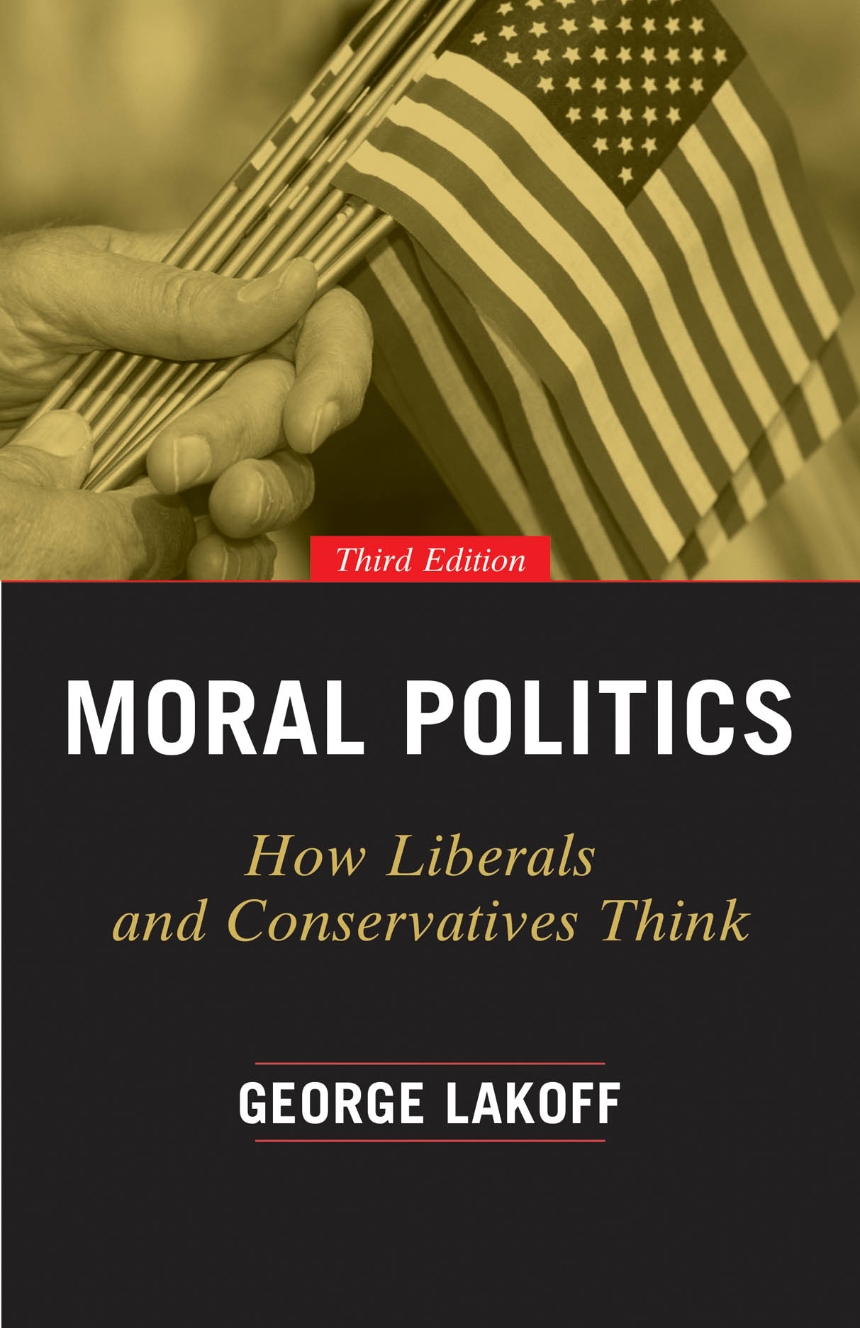
When Moral Politics was first published two decades ago, it redefined how Americans think and talk about politics through the lens of cognitive political psychology. Today, George Lakoff’s classic text has become all the more relevant, as liberals and conservatives have come to hold even more vigorously opposed views of the world, with the underlying assumptions of their respective worldviews at the level of basic morality. Even more so than when Lakoff wrote, liberals and conservatives simply have very different, deeply held beliefs about what is right and wrong.
President George W. Bush begon de oorlog tegen Irak met geen andere motivering dan de onmiddellijke bedreiging van Amerika met chemische, biologische en nucleaire wapens door het Irak van Saddam Hoessein en diens samenwerking met Osama bin Laden. Zo werd het Amerikaanse publiek en de rest van de wereld klaargestoomd voor een oorlog. Een oorlog die, zo bleek als snel, was gebaseerd op een leugen en ingegeven door olie-belangen.
President George W. Bush begon de oorlog tegen Irak met geen andere motivering dan de onmiddellijke bedreiging van Amerika met chemische, biologische en nucleaire wapens door het Irak van Saddam Hoessein en diens samenwerking met Osama bin Laden.

De invasie in Irak, nu tien jaar geleden, was gebaseerd op de getuigenissen van twee leugenaars. De belangrijkste van hen wilde asiel in Duitsland, de ander een nieuw huis.
Op 20 maart is het een jaar geleden dat de Brits-Amerikaanse oorlogscoalitie Irak binnenviel. In Londen en Washington luidde het officieel dat Irak een bedreiging vormde voor de wereldvrede. Niet alleen weigerde Saddam Hoessein zijn massavernietigingswapens te ontmantelen.
Er is geen enkele reden om het handelen van Poetin goed te praten. Dat doe ik dan ook niet. Maar de aanloop naar de oorlog in Oekraïne lijkt toch wat ingewikkelder in elkaar te zitten dan we in veel media lezen. Er zijn genoeg bewijzen dat de Amerikanen de Russen bewust hebben geprovoceerd - of in ieder geval de historische belangen van Rusland hebben genegeerd. Als dat zo is, werpt het een heel ander licht op die oorlog. En op de oplossing.
Washington en de reguliere media beweren dat Vladimir Poetin een Hitler-achtige expansionist is die Oekraïne binnenviel in een niet-uitgelokte landroof. Als u het daar niet mee eens bent – of zelfs als u het niet zeker weet – kunt u wel eens ‘Poetins marionet’ of een ‘dupe van het Kremlin’ worden genoemd.In dit boek belicht ik de andere kant van het verhaal. Ik laat zien dat de Russische invasie het best kan worden begrepen als een reactie op het misleidende en provocerende westerse beleid, vooral op de invasie van Amerikaanse en NAVO-troepen aan de Russische grenzen. Als de schoen aan de andere kant had gezeten – als Rusland tegenover de VS had gehandeld zoals de VS tegenover Rusland had gehandeld – zou Washington ook ten oorlog zijn getrokken.Dit boek vertelt het verhaal waarvan Washington en zijn bondgenoten – de westerse politici en militaire strategen die deze catastrofe hebben helpen veroorzaken – niet willen dat jij het hoort.
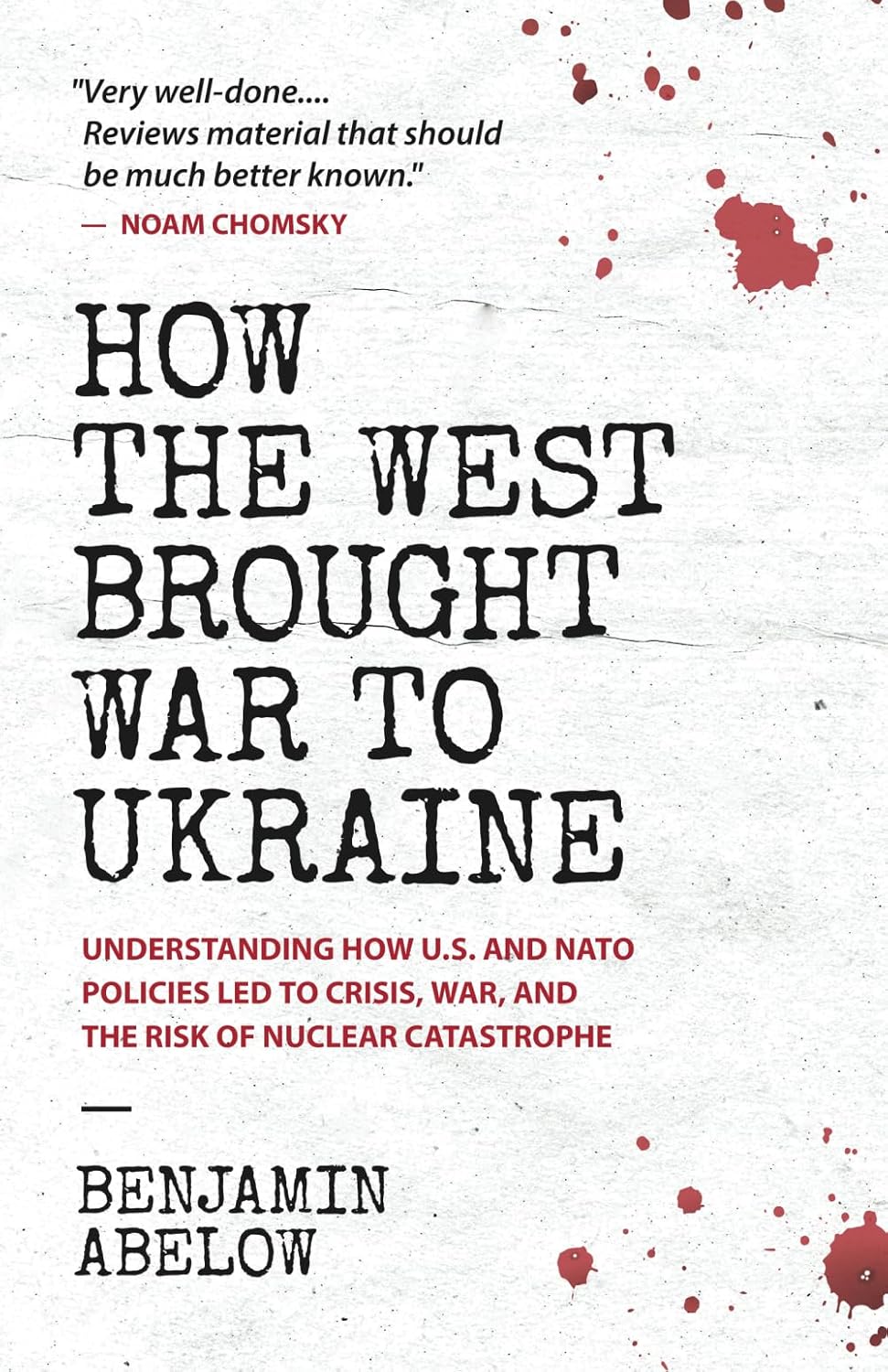
Benjamin Abelow is an analyst, author and lobbyist for nuclear policies. Abelow discusses his book "How the West Brought War to Ukraine".
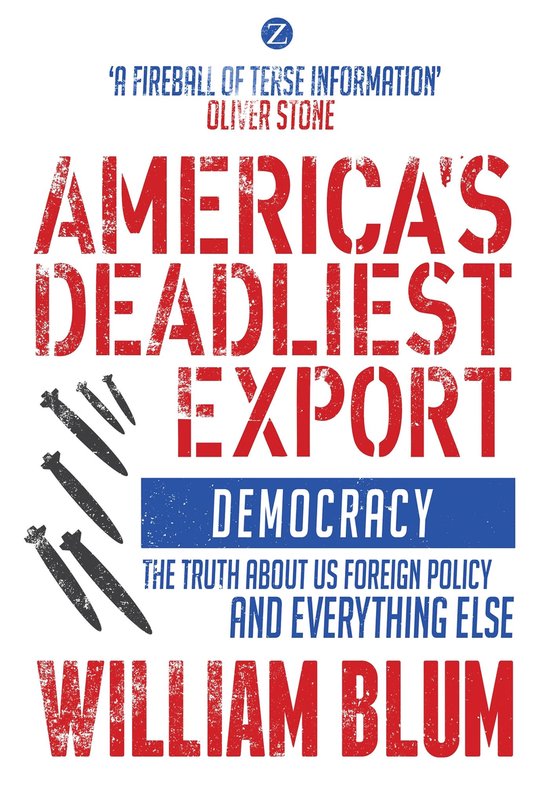
For over sixty-five years, the United States war machine has been on automatic pilot. Since World War II we have been conditioned to believe that America's motives in 'exporting' democracy are honorable, even noble.In this startling and provocative book, William Blum, a leading dissident chronicler of US foreign policy and the author of controversial bestseller Rogue State, argues that nothing could be further from the truth.Moreover, unless this fallacy is unlearned, and until people understand fully the worldwide suffering American policy has caused, we will never be able to stop the monster.
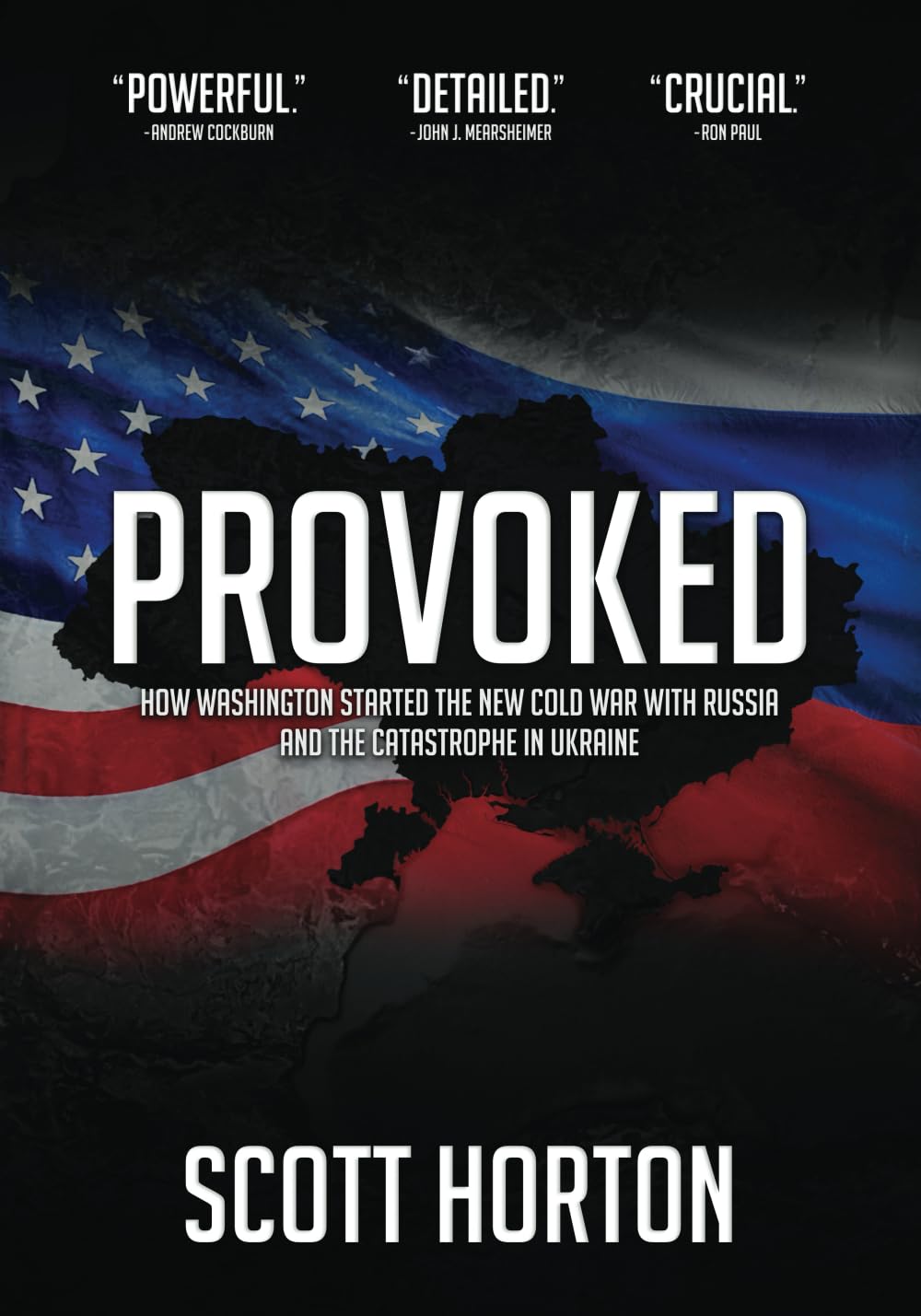
Over and over, U.S. government officials and their mainstream media allies called Russia’s 2022 invasion of Ukraine an “unprovoked attack.” The slogan became so overused that people began to ask the obvious question: Why do they protest so much? In Provoked: How Washington Started the New Cold War with Russia and the Catastrophe in Ukraine, Scott Horton explains how since the end of the last Cold War and the fall of the Soviet Union, successive U.S. administrations pressed their advantage against the new Russian Federation to the point that it finally blew up into a full-scale war between Russia and Ukraine. From NATO expansion into Eastern Europe, to “shock therapy” economic policy, the Balkan and Chechen wars, color-coded revolutions, new missile defense systems, assassinations, Russiagate and ultimately the brutal conflict in Ukraine, Provoked shows what really happened and why it did not have to be this way.
A mini-documentary on the background of the Ukraine conflict follows Jeffrey Sachs’ lecture at the Cambridge Union. The journey begins in the early 1990s and continues to the present day. The documentary features interviews and statements from world leaders along the way, shedding light on significant historical geopolitical events and questioning the narrative created by Western media. What is true and what is not—that decision is left to the viewer.
Een uitspraak die veel gebruikt is, maar, die vooral impact maakte tijdens de toespraak van president van de Verenigde Staten George W. Bush na de aanslagen van 11 september 2001. Het bleek een effectieve manier om critici de mond te snoeren en ervoor te zorgen dat bondgenoten meewerkten aan de oorlog die Amerika begon tegen terrorisme.
In political communication, the phrase "you are either with us, or against us" and similar variations are used to generate polarisation and reject non-partisanship.[citation needed] The implied consequence of not joining the partisan effort of the speaker is to be deemed an enemy. A contemporary example is the statement of former US President George W. Bush, who declared at the launch of his anti-terrorism campaign, "Every nation, in every region, now has a decision to make. Either you are with us, or you are with the terrorists."
President George W. Bush announced the creation of the Office of Homeland Security during an address to a joint session of Congress on Sept. 20, 2001, nine days after the 9/11 terror attacks. "Our war on terror begins with al Qaeda, but it does not end there. It will not end until every terrorist group of global reach has been found, stopped and defeated," Bush said.
Groepen hebben belangrijke invloed op ons denken. Dat maakt sociaal psychologisch onderzoek al decennia duidelijk. Dat gebeurt in ambigue situaties, als er geen duidelijk goed of fout antwoord is, maar zeker ook als er wel een duidelijk goed of fout antwoord is. ZIe bijvoorbeeld de onderstaande boeken en artikelen.
Groepen hebben belangrijke invloed op ons denken. Dat maakt sociaal psychologisch onderzoek al decennia duidelijk. Dat gebeurt in ambigue situaties, als er geen duidelijk goed of fout antwoord is, maar zeker ook als er wel een duidelijk goed of fout antwoord is. ZIe bijvoorbeeld de onderstaande boeken en artikelen.
The Asch paradigm was a series of conformity experiments by Solomon Asch designed to investigate how social pressure from a majority group could influence an individual to conform. In the experiments, groups of participants were asked to match the length of lines on cards, a task with an obvious answer.
An experiment demonstrated that false incriminating evidence can lead people to accept guilt for a crime they did not commit Subjects in a fast- or slow-paced reaction time task were accused of damaging a computer by pressing the wrong key All were truly innocent and initially denied the charge A confederate then said she saw the subject hit the key or did not see the subject hit the key Compared with subjects in the slow-pacelno-witness group, those in the fast-pace/witness group were more likely to sign a confession, internalize guilt for the event, and confabulate details in memory consistent with that belief Both legal and conceptual implications are discussed
In collectivistische landen zoals India hebben groepsnormen meer invloed op het gedrag van mensen dan in individualistische landen zoals Nederland. Het lijkt er echter op dat dit andersom geldt voor emoties. In landen als Nederland lijken we meer te worden beïnvloed door wat we denken dat we moeten voelen. Niet onbelangrijk als je bedenkt dat emoties een belangrijke invloed hebben op onze politieke keuzes. Zie bijvoorbeeld deze onderzoeken:
Within- and between-nations differences in norms for experiencing emotions were analyzed in a cross-cultural study with 1,846 respondents from 2 individualistic (United States, Australia) and 2 collectivistic (China, Taiwan) countries. A multigroup latent class analysis revealed that there were both universal and culture-specific types of norms for experiencing emotions. Moreover, strong intranational variability in norms for affect could be detected, particularly for collectivistic nations. Unexpectedly, individualistic nations were most uniform in norms, particularly with regard to pleasant affect. Individualistic and collectivistic nations differed most strongly in norms for self-reflective emotions (e.g., pride and guilt).
It is generally assumed that there is greater pressure to conform to social norms in collectivist cultures than in individualist cultures. However, most research on cultural differences in social norms has examined norms for behaviors. Here, we examine cultural differences in norms for emotions
We kunnen vaak het verschil niet meer maken tussen een complottheorie en een kritische vraag. En dat terwijl kritische vragen in een democratie gerechtvaardigd zijn - noodzakelijk zijn. Drie voorbeelden die ik in mijn boek aanhaal.
The Bill and Melinda Gates Foundation (BMGF) has been the World Health Organization’s (WHO) second biggest source of funding in recent years, contributing 9.5% of WHO’s revenues between 2010 and 2023 through voluntary contributions. It is widely assumed that BMGF’s financial power allows it to exert considerable influence over WHO. However, very little empirical research has been undertaken into the BMGF-WHO relationship. Our study investigates how the money that BMGF gives to WHO is spent.
Afhankelijkheid van miljardairs zorgt ervoor dat we ook afhankelijk zijn van de nukken van die miljardairs en hun ‘nieuwe inzichten.
De klimaatverandering zal een grote impact hebben, maar zal niet het einde zijn van de mensheid. Dat zegt miljardair Bill Gates in aanloop naar de nieuwe VN-klimaattop. Gates is een klimaatactivist die veel investeerde in groene energie. Nu neemt hij in een essay afstand van wat hij "doemdenken" noemt. Hij wil de focus verleggen naar de strijd tegen armoede en ziekte.
European Court of Auditors accuses Commission of refusing to release details of how the bloc’s biggest vaccine contract was negotiated.
Ons denken is niet optimaal, zeker niet. We maken gebruik van beslissingsregels (heuristieken). Regels die zijn gebaseerd op eerdere ervaringen, indrukken en veronderstellingen. Dit zorgt voor veel fouten in onze beoordeling van situaties en mensen. Psychologen onderscheiden meer dan 150 soorten denkfouten, zoals confirmatie bias, beschikbaarheidsbias, en false consensus.
In psychology and cognitive science, cognitive biases are systematic patterns of deviation from norm and/or rationality in judgment. They are often studied in psychology, sociology and behavioral economics
A list of the most relevant biases in behavioral economics
Many decisions are based on beliefs concerning the likelihood of uncertain events such as the outcome of an election, the guilt of a defendant, or the future value of the dollar. These beliefs are usually expressed in statements such as "I think that . . . ," "chances are. . . ," "it is unlikely that . . . ," and so forth. Occasionally, beliefs concerning uncertain events are expressed in numerical form as odds or subjective probabilities. What determines such beliefs? How do people assess the probability of an uncertain event or the value of an uncertain quantity?
TThe availability heuristic is a type of mental shortcut that involves estimating the probability or risk of something based on how easily examples come to mind. If we can think of many examples, then we assume it happens frequently.
The similarity heuristic is a psychological heuristic pertaining to how people make judgments based on similarity. More specifically, the similarity heuristic is used to account for how people make judgments based on the similarity between current situations and other situations or prototypes of those situations.
Op de pagina 'Het is schappelijk om te weten' staat meer informatie over de confirmatiebias, een belangrijke bias bij het in standhouden van ons wereldbeeld.